Base Set and Wizards of the Coast sets (1999-2003)
Base Set, Jungle, Fossil, Team Rocket, Neo. The value gap between a raw copy and a high-grade slab is the largest in all of TCG. Centering is the number one limiting factor.
Vintage Pokémon is the most demanding segment in grading: a blue back that shows every mark, irregular cuts from the Wizards of the Coast era, holos that scratch on contact. A pre-analysis keeps you from submitting a card that comes back an 8.
To estimate a Pokémon card's grade before submitting it, photograph the front and back flat under diffuse light, then assess four criteria: centering (PSA requires 55/45 on the front for a 10), the condition of all four corners, edge regularity and surface condition. On vintage Pokémon, the blue back and centering are the two most common reasons a card falls short.
01 — Cards
The pieces collectors send in first — and what to watch on each.

Charizard
Base Set · 4/102 · 1999
Centering and back whitening
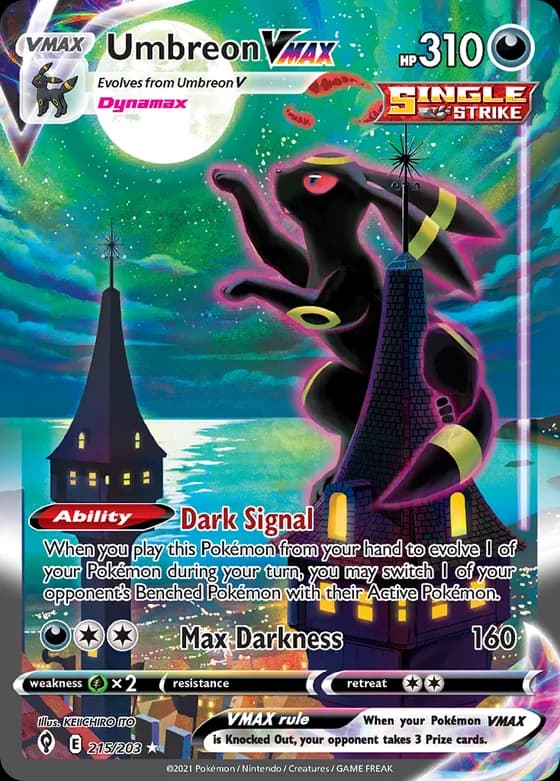
Umbreon VMAX
Evolving Skies · 215/203 · 2021
Textured alt art, scratches easily

Lugia
Neo Genesis · 9/111 · 2000
Frequently miscut

Rayquaza VMAX
Evolving Skies · 218/203 · 2021
Black borders are unforgiving
02 — Key points
The defects that cap the grade, in order of frequency.
1999-2003 print runs are notorious for loose cutting. A 65/35 front is enough to cap a card at 8, however perfect it is otherwise.
The Pokémon back shows the slightest corner or edge whitening. It is often what separates a 9 from a 10.
The holographic layer on Charizard, Blastoise and friends scratches from simple rubbing in an unprotected binder. Raking light reveals them.
On modern sets (Sword & Shield, Scarlet & Violet), dark borders show white micro-chips straight out of the pack.
03 — Guides
Four segments deserve their own method.
04 — Details
Where grading changes value the most.
Base Set, Jungle, Fossil, Team Rocket, Neo. The value gap between a raw copy and a high-grade slab is the largest in all of TCG. Centering is the number one limiting factor.
Illustration Rare, Special Illustration Rare, event promos. High demand and limited print runs: grading secures authenticity as much as condition.
More consistent cuts and generally better centering than western prints, which statistically yields more high grades. Watch for company-specific tolerances on Japanese cards.
High volume, low unit value: only high grades justify the grading fee. This is exactly where a pre-estimate stops you losing money.
05 — Questions
PSA remains the reference for liquidity and market recognition on Pokémon, especially vintage. CGC is appreciated for its slabs and its handling of Japanese cards. BGS attracts those chasing detailed subgrades and the Black Label. In Europe, PCA (France), CGC in Munich and PSA in Frankfurt grade without customs; PCA takes one month at its Fast tier and six months at its cheapest, Classic.
No, and this is the most expensive misconception. Centering and cutting defects are created at print, not through handling: a card that has never been touched can be 70/30 off-center and cap at 7.
Removing dust with a dry microfibre cloth is safe. Any liquid product or firm rubbing can alter the surface, which counts as alteration and can lead to a grading refusal.
Yes. Grading companies grade the card as a whole. PSA tolerates 75/25 centering on the back for a 10, against 55/45 on the front — but a whitened corner on the back penalises the final grade just as much as one on the front.
06 — Read next
Two photos are enough to know whether the submission is worth it.